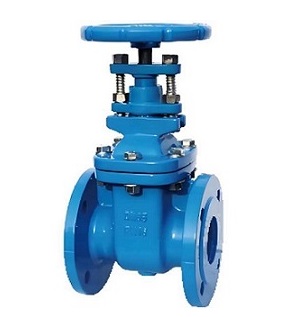
DIN Metal Seated NRS Gate Valve

Robust non-rising stem gate valve compliant with DIN standards, engineered for high-temperature, high-pressure, and abrasive media applications in power, oil & gas, and industrial sectors.

View Technical Specs
DIN Resilient Seated NRS Gate Valve

Product Overview

The DIN Metal Seated Non-Rising Stem (NRS) Gate Valve is a heavy-duty fluid control solution designed and manufactured to comply with German DIN standards (DIN 3352 Part 2, DIN 2501, etc.). Featuring a non-rising stem design and metal-to-metal seating, this valve delivers exceptional performance in applications where space constraints, high temperatures, and abrasive media are common.

Unlike rising stem gate valves, the NRS design keeps the stem fully enclosed within the valve body during operation, making it ideal for installations with limited vertical space or where stem protection from external damage is required. The metal-to-metal seating ensures reliable shut-off even in high-temperature and high-pressure environments.

Constructed with carbon steel or stainless steel body and Stellite/Hardfaced metal seating, our DIN NRS gate valve offers superior erosion resistance, high-temperature tolerance, and long service life—suitable for steam, oil, gas, slurry, and other aggressive media across power generation, oil & gas, and chemical processing sectors.

Key Features & Benefits

Space-Saving Design

Non-rising stem design eliminates vertical space requirements, ideal for underground installations and compact equipment rooms.

High-Temperature Capability

Metal-to-metal seating and heat-resistant materials allow operation up to 600°C, suitable for steam and high-temperature process applications.

Abrasion Resistance

Hardfaced Stellite or WC-Co seating resists wear from abrasive media such as slurry, ash, and particulate-laden fluids.

High-Pressure Rating

Designed to withstand PN40 to PN100 pressure classes, suitable for critical high-pressure applications in power and oil & gas industries.

Reliable Sealing

Precision-machined metal seating surfaces provide bubble-tight shut-off even after thousands of cycles, ensuring long-term performance.

DIN Standard Compliance

Fully compliant with DIN 3352, DIN 2501, and EN standards, ensuring compatibility with European pipeline systems and industry requirements.

Technical Specifications

Basic Parameters

Parameter Specification Range
Nominal Diameter (DN) DN50 ~ DN1200 (2" ~ 48")
Common Sizes: DN50, DN80, DN100, DN150, DN200, DN300, DN400
Nominal Pressure (PN) PN16, PN25, PN40, PN63, PN100 (16bar to 100bar)
Operating Temperature -20°C ~ 600°C (Custom materials for extreme temperatures)
Applicable Media Steam, Oil, Gas, Slurry, Abrasive Fluids, High-Temperature Water, Chemicals
Sealing Class ANSI Class IV, EN 12266-1 (Metal-to-Metal)

Material Specifications

Component Material Options Standards/Features
Valve Body Ductile & Casting Iron,Carbon Steel, Stainless Steel, Alloy Steel ASTM A216 WCB, A351 CF8/CF8M, A182 F11/F22 (High-Temperature)
Disc Ductile & Casting Iron,Carbon Steel/Stainless Steel + Hardfacing Stellite 6, WC-Co, Chrome Carbide (Abrasion-Resistant)
Stem Stainless Steel, Alloy Steel ASTM A182 F6a, F316, F51 (Duplex) - Corrosion & Heat Resistant
Seats Stellite, WC-Co, Chrome Plated Metal-to-Metal, Erosion & High-Temperature Resistant
Fasteners High-Strength Alloy Steel ASTM A193 B7/B16, A194 2H/8M - High-Temperature & Corrosion Resistant

Standards & Compliance

  • Design Standards: DIN 3352 Part 2, DIN 3202 F1/F2, API 600, BS 1414
  • Flange Standards: DIN 2501, DIN 2533, EN 1092-1, ASME B16.5
  • Testing Standards: DIN 3230, API 598, BS 6755, EN 12266-1 (Hydrostatic, Shell, Leakage Testing)
  • Certifications: ISO 9001, CE, API 600, PED 2014/68/EU

Working Principle

The DIN Metal Seated NRS Gate Valve controls fluid flow through the interaction between a hardfaced metal disc and metal seat, with an enclosed non-rising stem mechanism:

  1. Opening Process: Rotating the handwheel or actuator drives the stem to rotate within the valve body. The stem's threaded connection moves the disc vertically, lifting it away from the metal seat to open the fluid passage. The stem remains fully enclosed, with no vertical extension.
  2. Closing Process: Reverse rotation of the handwheel/actuator lowers the disc onto the metal seat. The precision-machined metal surfaces create a tight seal, blocking fluid flow. The stem remains enclosed, providing protection from external damage and contamination.
  3. Sealing Assurance: The metal-to-metal seating design ensures reliable shut-off even at high temperatures and pressures. The hardfaced surfaces resist wear and erosion, maintaining sealing integrity over thousands of operating cycles.

Application Areas

Power Generation

Boiler feedwater, steam lines, ash handling systems, and flue gas desulfurization (FGD) processes.

Oil & Gas Industry

Crude oil pipelines, gas transmission, refinery processes, and offshore platform applications.

Chemical Processing

High-temperature chemical reactors, acid/alkali transfer, and petrochemical processing plants.

Mining & Minerals

Slurry pipelines, tailings disposal, and abrasive mineral processing applications.

Installation & Maintenance

Installation Guidelines

  • Inspect valve for damage and confirm closed position before installation; clean pipeline connections to remove debris.
  • Install in any orientation (bi-directional flow), ensure handwheel/actuator is accessible for operation and maintenance.
  • Tighten flange bolts evenly in a crisscross pattern to avoid uneven pressure on the sealing surface.
  • Ensure sufficient space around the valve for operation and maintenance, including actuator access.
  • Conduct hydrostatic testing (1.5×PN) and leakage testing after installation before commissioning.

Maintenance Recommendations

  • Regularly inspect stem packing for leaks; adjust or replace packing as needed to maintain stem seal integrity.
  • Check metal seating surfaces for signs of wear or damage; recondition or replace hardfacing if necessary.
  • Lubricate stem threads annually with high-temperature grease to ensure smooth operation.
  • For long-term shutdown, keep valve fully open to prevent media from settling on seating surfaces.
  • Use only manufacturer-recommended replacement parts to maintain performance and compliance with standards.

Frequently Asked Questions (FAQ)

Q: What is the difference between NRS and RS gate valves?

A: NRS (Non-Rising Stem) valves keep the stem enclosed within the body during operation, ideal for space-constrained installations. RS (Rising Stem) valves have a stem that extends vertically when opened, providing visual position indication.

Q: Can metal seated valves handle abrasive media?

A: Yes, our metal seated valves feature hardfaced Stellite or WC-Co seating surfaces that resist wear from abrasive media such as slurry, ash, and particulate-laden fluids.

Q: What is the maximum temperature rating for these valves?

A: Standard metal seated NRS gate valves can operate up to 600°C. For higher temperatures, custom materials and designs are available—contact our technical team for solutions.

Q: How do I know if the valve is open or closed with NRS design?

A: NRS valves do not provide visual position indication via the stem. Position indicators (e.g., handwheel markings, limit switches) or smart actuators with remote monitoring are recommended for position verification.

Need Custom Solutions?

Our engineering team can customize DIN Metal Seated NRS Gate Valves to meet your specific pressure, temperature, and media requirements. Contact us today for a personalized quote.

Contact Our Technical Team